
For years, minimalism dominated the interior design world. Clean lines. White walls. Bare surfaces. The aesthetic was clear: less is more. And while minimalism brought calm and order into our homes, something has been quietly shifting.
The conversation online, in design fairs, and in client meetings is no longer about stripping everything away. It’s about creating spaces that feel intentional, layered, and deeply human. The trend is evolving from strict minimalism to something warmer, softer, and more supportive: warm minimalism.
This shift reflects something bigger than style. It reflects how we live now — and what we truly need from our homes.
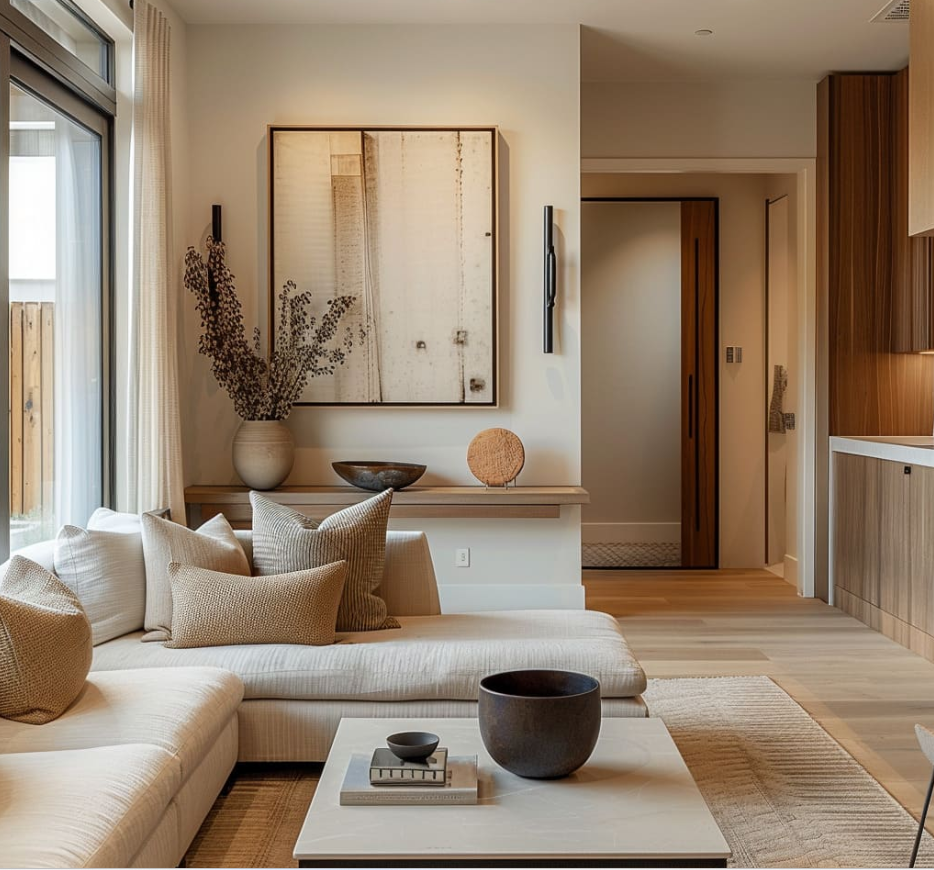
From “Less Is More” to “Less, But Better”
Minimalism taught us discipline. It taught us to declutter, to choose quality over quantity, and to value space. But in many homes, minimalism was interpreted as cold, empty, or emotionally distant.
White walls, sharp edges, glossy finishes, and minimal decoration can create visual clarity — but sometimes at the cost of comfort.
Warm minimalism keeps the principles of simplicity and intentionality, but adds what was missing:
- Texture
- Depth
- Natural materials
- Subtle color
- Personal meaning
It replaces stark whites with warm neutrals. It softens straight lines with curved silhouettes. It swaps glossy surfaces for matte finishes, wood grains, linen, stone, and tactile fabrics.
It says: you can have clarity without sacrificing coziness.

Why This Shift Is Happening
Our homes are no longer just places where we sleep and store belongings. They are:
- Offices
- Study spaces
- Entertainment hubs
- Retreats
- Social spaces
- Family command centers
In recent years, we have spent more time at home than ever before. We realized something essential: beauty alone is not enough. A home must support the rhythm of our lives.
A visually perfect space that does not function well becomes frustrating. A minimalist home without emotional warmth feels incomplete. A beautiful kitchen that does not accommodate family cooking habits quickly becomes impractical.
Warm minimalism answers this tension. It merges aesthetic clarity with emotional comfort and daily functionality.
The Home as a Safe Haven
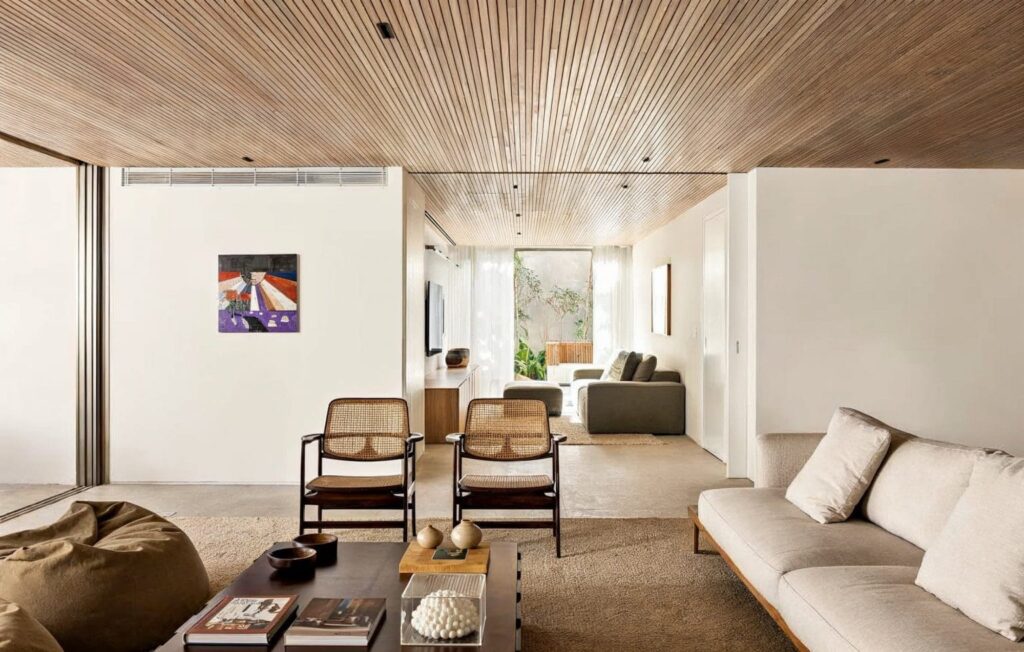
Beyond trends, one of the strongest movements in interior design today is the idea of the home as a safe haven.
A safe haven is not just a space that looks good in photos. It is a space that:
- Reduces visual stress
- Supports routines
- Accommodates family habits
- Encourages rest
- Feels grounding
Warm minimalism creates that safe haven by embracing softness — both visually and emotionally.
Think of layered curtains filtering natural light. A textured rug underfoot. A built-in bench that makes putting on shoes easier for children. A reading corner that invites pause. A compact laundry cleverly integrated into a kitchen so the home flows better.
These are not decorative decisions alone. They are lifestyle decisions.
Functionality Is Not Optional
One of the biggest misunderstandings in design is separating beauty from functionality. In reality, the most successful interiors are those where functionality is invisible — because it has been carefully planned.
Warm minimalism does not mean adding more objects. It means designing smarter.
It asks questions like:
- Where does the family naturally gather?
- What are the daily friction points?
- Is there enough storage where it’s actually needed?
- Does circulation feel easy?
- Can the home adapt to future changes?
When a home supports daily life, stress decreases. When storage is integrated seamlessly, clutter disappears naturally. When materials are durable and suitable for children or pets, maintenance becomes easier.
Design becomes a tool for living better — not just decorating.
Materials That Support Comfort
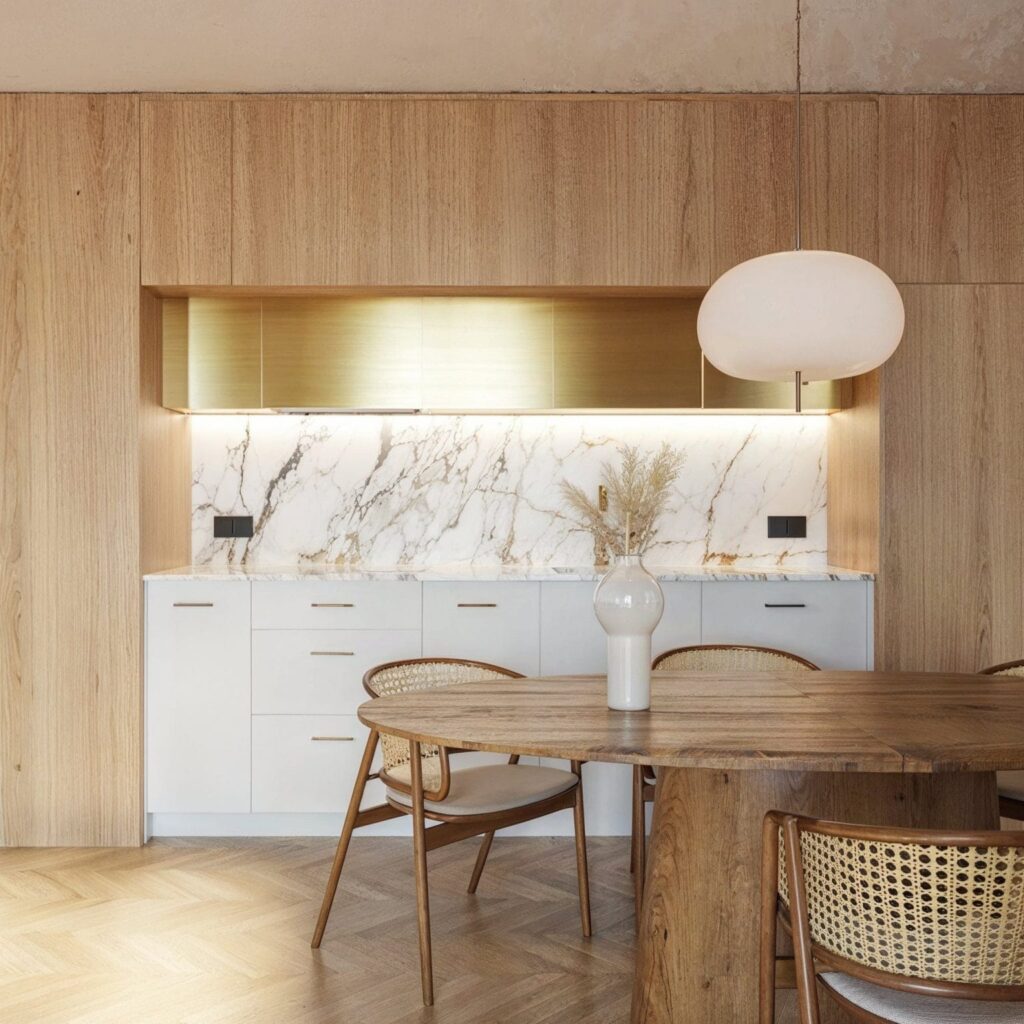
Another defining characteristic of warm minimalism is the choice of materials.
Cold minimalism often leaned heavily on polished concrete, glass, and high-gloss lacquer. Warm minimalism embraces:
- Natural wood
- Linen and cotton textiles
- Stone with visible texture
- Warm metals like brushed brass
- Soft matte finishes
These materials age gracefully. They carry subtle imperfections. They feel alive.
A wooden dining table with visible grain tells a story. A linen sofa invites touch. A clay-toned wall absorbs light in a way that feels calming rather than clinical.
Materiality becomes emotional.

Color: The Subtle Power Shift
Color palettes have also shifted.
Instead of stark white and cool grey, we now see:
- Warm beiges
- Creamy ivories
- Sand tones
- Soft taupes
- Muted greens
- Gentle terracotta hues
These tones create grounding environments. They feel stable and nurturing.
Even when the overall palette remains neutral, undertones matter. A warm white feels completely different from a blue-based white. A taupe with depth creates dimension without overwhelming the eye.
The goal is balance: calm, but not sterile.
Supporting the Family Lifestyle
Every family is unique. Warm minimalism adapts to that individuality.
A family with teenagers needs different storage solutions than a couple working from home. A young family may prioritize durable materials and flexible layouts. A frequent traveler may value low-maintenance finishes and smart organization.
Designing with lifestyle in mind means:
- Planning integrated storage in high-traffic areas
- Creating multifunctional rooms
- Designing lighting layers for different moods and times of day
- Incorporating technology discreetly
- Ensuring comfort in seating and layout
A home should not require constant adjustment from its residents. Instead, it should anticipate their needs.
When a space is thoughtfully designed, it quietly supports daily life without demanding attention.

Emotional Well-Being and Design
There is growing awareness about how our environment affects mental and emotional health.
Clutter increases stress. Poor lighting affects mood. Uncomfortable layouts create friction. Lack of privacy impacts rest.
Warm minimalism addresses these concerns by:
- Reducing visual noise
- Enhancing natural light
- Encouraging organization
- Creating defined yet fluid zones
- Incorporating natural elements
Plants, natural materials, and tactile finishes contribute to a sense of grounding. Curved forms soften the environment. Thoughtful lighting creates atmosphere.
The result is not just aesthetic harmony — but emotional support.

Designing Once, Living Better for Years
Trends will always evolve. But the essence of warm minimalism is not about following fashion. It is about creating longevity.
When we design with function, comfort, and lifestyle in mind, we reduce the need for constant renovation. We avoid impulsive purchases. We invest in pieces that age well.
Designing once, thoughtfully, allows you to live better for years.
It saves money in the long run. It reduces frustration. It creates cohesion. It gives you confidence in your space.
At The Creative Design, we believe that good design begins with listening. We guide our clients through a structured yet deeply personal journey — from understanding their daily routines and challenges, to developing cohesive layouts, selecting materials that align with their lifestyle, and visualizing the space through 2D and 3D presentations before execution. Our role is not simply to make a space beautiful, but to make it functional, intentional, and aligned with the way each family truly lives. By planning carefully from the beginning, we help clients avoid costly mistakes, make confident decisions, and create homes that feel complete — not just for today, but for years to come.
And most importantly, it makes coming home feel good.

A More Human Approach to Design
The move from minimalism to warm minimalism reflects a deeper understanding: our homes should feel human.
Not staged. Not sterile. Not overly decorated.
But intentional. Comfortable. Supportive.
The future of interior design is not about having less or having more. It is about having what truly serves you.
A well-designed home holds your routines, your memories, your conversations, your quiet moments.
It supports your family.
It simplifies your days.
It embraces you at the end of each one.
And that is a trend worth keeping.
With warmth and intention,
Juliana