
Most people think lighting is the final step of a project: pick nice fixtures, add warm bulbs, done.In reality, lighting is one of the first decisions that should be made, because light doesn’t just show your interior.
It controls sleep quality, focus, mood, appetite, and even how large your space feels.You don’t experience a room through furniture.
You experience it through light reflected off surfaces
Your Home Runs on a Circadian Clock
Humans evolved outdoors. Our brain still expects the same light pattern:
- Bright, cool light in the morning → wakefulness
- Neutral daylight mid-day → productivity
- Warm, dim light in the evening → melatonin release
- Darkness at night → recovery
This 24-hour biological rhythm is called the circadian cycle.
Modern interiors often break it.
Typical apartment lighting:
- One ceiling light
- Same brightness all day
- Same color temperature all night
The brain interprets this as “eternal noon,” which suppresses melatonin.
Result: poor sleep, low energy mornings, mental fatigue, and difficulty relaxing at night.
Good lighting design restores time awareness indoors.
The Biggest Lighting Mistake: The Single Ceiling Light
One central fixture creates:
- Flat faces and shadows under eyes
- Dark corners (brain reads smaller space)
- Visual fatigue
- No mood control
- Over-brightness at night
A room with one light source is not fully lit — it’s overexposed.
Professional interiors always layer light.
The 4 Layers of Proper Illumination
1. Ambient Light — Orientation
General brightness that lets you move safely.
Examples:
- Indirect ceiling lighting
- Cove lighting
- Wall washing
Goal: you should see the room without noticing the source.
2. Task Light — Function
Placed where your eyes work.
Examples:
- Reading lamps
- Kitchen counter lights
- Desk lighting
- Vanity mirrors
Goal: illuminate the activity, not the whole room.
3. Accent Light — Depth
Creates contrast and prevents flatness.
Examples:
- Art lighting
- Shelf lighting
- Plant lighting
- Texture grazing on walls
Goal: shadows = perception of dimension.
4. Decorative Light — Emotion
The fixture itself becomes part of the atmosphere.
Examples:
- Pendants
- Table lamps
- Sculptural fixtures
Goal: emotional identity, not brightness.
Color Temperature: The Most Ignored Decision
Light has color. Your brain reads it subconsciously.
| Temperature | Feels Like | Where To Use |
|---|---|---|
| 5000K+ | Outdoor daylight | Workspaces only |
| 4000K | Neutral office | Kitchens (daytime heavy use) |
| 3000K | Comfortable home | Living areas |
| 2700K | Relaxed evening | Bedrooms |
| 2200K | Candlelight | Night lighting / winding down |
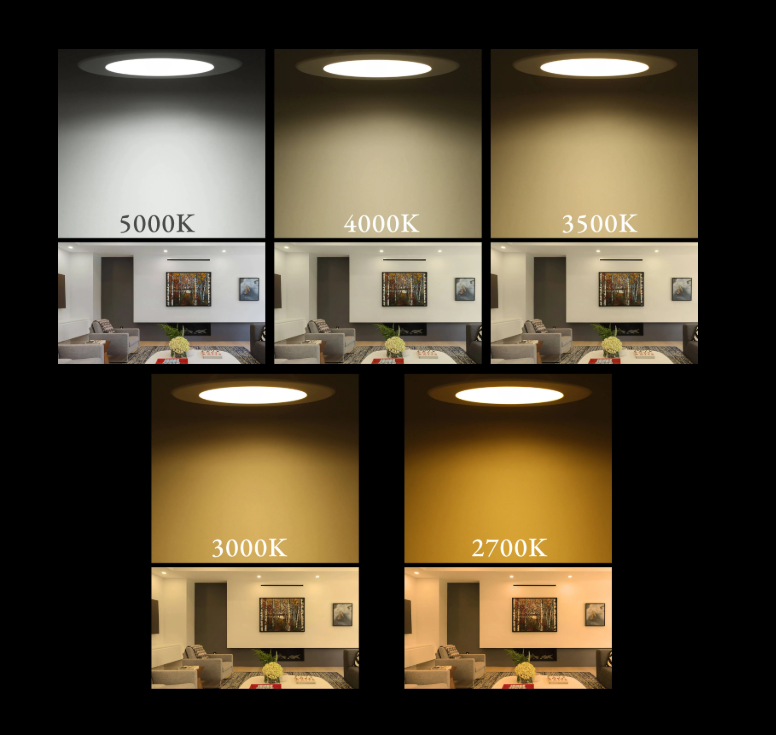
A bedroom lit at 4000K tells your brain: stay alert.
A workspace at 2700K tells your brain: slow down.
Lighting should follow biology, not habit.
Brightness Matters More Than Fixture Size
People often buy bigger lamps when they need less intensity.
Key principle:
Even distribution beats strong brightness.
Many low-intensity sources are more comfortable than one strong source.
Why?
Your pupils constantly adjust to contrast — that causes eye fatigue.
Planning Lighting Like a Designer
Before choosing fixtures, answer three questions for each room:
- What activities happen here?
- At what time of day?
- Should the body feel alert or relaxed?
Now, place the lighting accordingly.
Example : Living Room
- Day: conversation, movement → soft ambient + daylight support
- Evening: relaxation → warm, low-level lamps
- Night: navigation → dim indirect light only
Same room, three lighting scenes.
Practical Tips You Can Apply Immediately
Use dimmers everywhere
Brightness control is more important than fixture choice.
Light walls, not just floors
Vertical light makes rooms feel larger and calmer.
Avoid visible bulbs in resting areas
Your brain reacts to glare as stress.
Add a light below eye level in the evening
Table and floor lamps signal sunset to the brain.
Never rely on recessed downlights alone
They create interrogation-room lighting.
What Good Lighting Actually Achieves
You fall asleep faster.
You wake up easier.
Rooms feel larger.
Colors look correct.
You stop feeling tired at home.
Clients often think they need new furniture — but after correcting lighting, the entire interior suddenly works.
Because design is not only what you see.
It’s how your body reacts inside the space.
Final Thought
Furniture shapes a room.
Lighting shapes your nervous system.
A beautiful interior, photographed poorly, looks average.
An average interior with good lighting feels exceptional.
Design the light first, everything else becomes easier.